

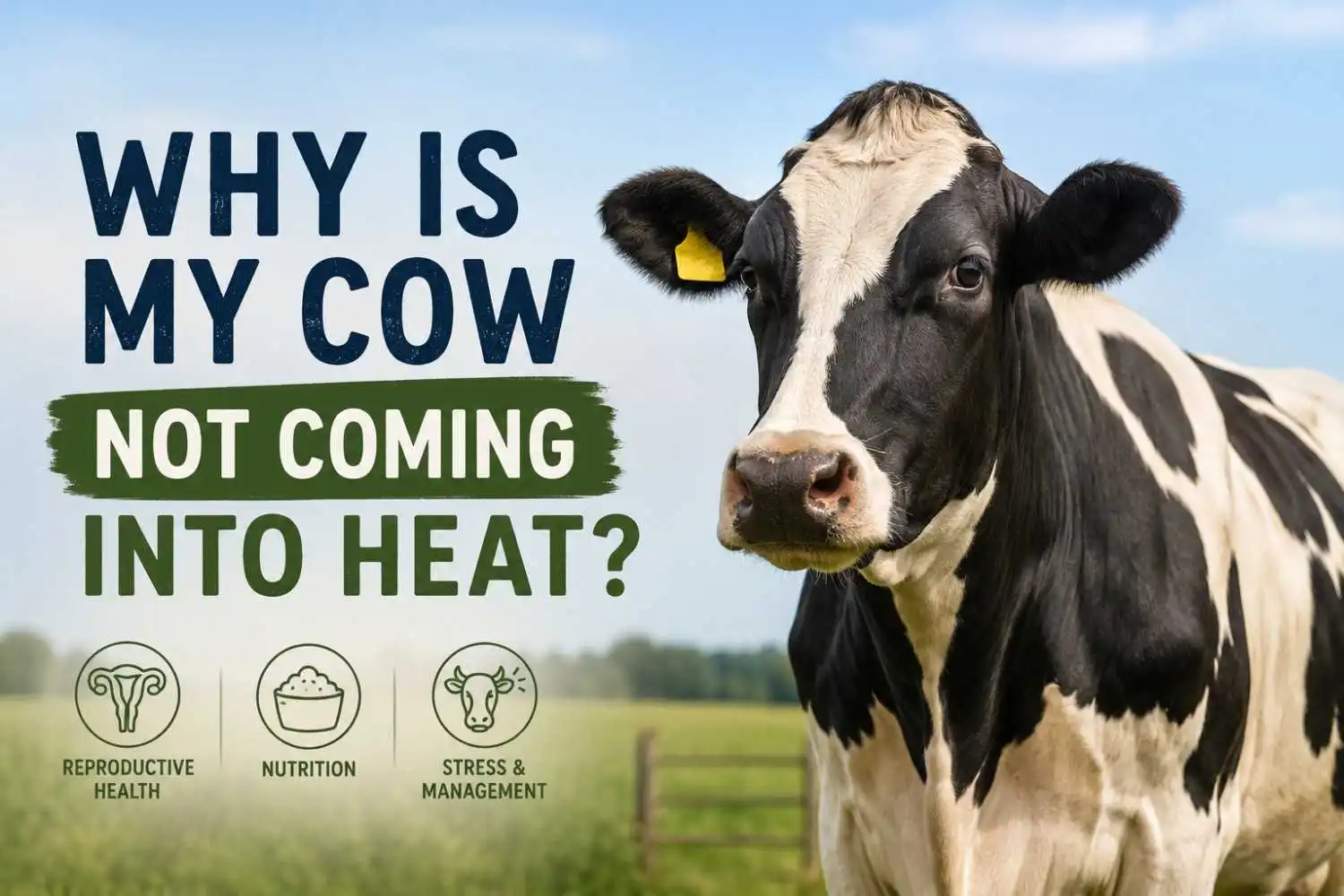
You’ve been waiting 3 months after calving. Your cow is eating well, producing milk — but no heat. No restlessness, no mounting, no swollen vulva, nothing. Every day that passes is a lost breeding cycle and lost income.
You ask neighbours. They say “wait a few more weeks.” Your vet suggests hormonal injections. But nobody talks about the most overlooked reason of all — what your cow is eating (or not eating).
Nutritional deficiencies are the single most common and fixable cause of anestrus (garmi na aana) in Indian dairy cows. And the good news? Once you correct them, most cows return to heat naturally — without expensive treatments.
In this guide, you’ll learn exactly which 6 nutrient deficiencies are most likely silencing your cow’s heat cycle, how to spot each one on your farm, and what you can do about it starting today.
What Is Anestrus and Why Does It Cost You Money?
A healthy dairy cow should come into heat every 18–21 days. Each heat lasts only 12–18 hours — which is why missing even one cycle is a problem. After calving, most cows should show their first heat within 45–60 days.
Anestrus means the cow is not cycling at all — no visible heat, no ovulation. This is different from silent heat, where the cow is cycling internally but showing no outward signs.
Here’s the financial impact most farmers don’t calculate:
- Every 21 days of delayed conception = 1 lost breeding cycle
- Average calving interval increases from 12–13 months to 16–18 months
- You get one less calf every 2–3 years
- Milk production in the next lactation starts later and lower
On a 10-cow farm, even 2–3 cows with delayed conception can cost you ₹30,000–₹60,000 per year in lost calves and reduced milk yield. The root cause, most of the time, is sitting right in the feed bucket.
6 Nutritional Reasons Your Cow Is Not Coming into Heat
1. Phosphorus Deficiency — The Most Common Culprit in India
What it is: Phosphorus is a macro-mineral essential for energy metabolism, bone development, and — critically — normal reproductive hormone function.
How it affects heat: Phosphorus deficiency directly suppresses ovarian activity. The cow’s body simply does not have enough energy currency to trigger the hormonal cascade that leads to heat expression. Studies in Indian dairy herds show phosphorus deficiency to be the single most common nutritional cause of anestrus.
Signs on your farm:
- Cow chewing bones, wood, or soil (called pica) — a classic sign
- Poor body condition despite adequate feeding
- Weak, brittle hooves
- Low milk yield
Fix: Ensure your daily mineral mixture contains adequate available phosphorus. Dry roughage-heavy diets (common in Rajasthan and Gujarat) are notoriously low in phosphorus. A balanced mineral premix fed daily is non-negotiable.
2. Vitamin E and Selenium Deficiency — The Reproductive Vitamins
What it is: Vitamin E is a powerful antioxidant. Selenium works alongside it to protect reproductive tissues from oxidative damage.
How it affects heat: The uterus and ovaries are highly sensitive to oxidative stress — especially in the 30–60 days after calving when the cow’s antioxidant reserves are depleted. Low Vitamin E and selenium leads to poor uterine recovery after calving, weak heat expression, and higher rates of early embryonic death even when conception occurs.
Signs on your farm:
- Retained placenta after calving
- Repeat breeding (AI done but cow doesn’t conceive)
- White muscle disease in calves
- Cow comes into heat but fails to hold pregnancy
Fix: A good quality mineral premix with organic selenium and Vitamin E, especially in the transition period (3 weeks before and after calving). Do not rely on roughage alone — Vitamin E degrades quickly in stored fodder.
3. Iodine Deficiency — The Silent Thyroid Disruptor
What it is: Iodine is a trace mineral that the body uses to make thyroid hormones. Most farmers have never heard of iodine deficiency in cattle — but it is surprisingly common in India’s inland regions.
How it affects heat: Thyroid hormones directly regulate the reproductive axis. Low iodine = low thyroid function = suppressed GnRH and LH production = no heat. Iodine deficiency is a classic cause of silent heat — where the cow is technically cycling but showing no visible signs.
Signs on your farm:
- Enlarged throat/neck in the cow (goitre — though this is rare)
- Weak or stillborn calves
- Calves born with no hair or poor coat
- Cow showing no heat signs even though she looks healthy
Fix: Iodine must be supplemented through mineral mixtures — it is rarely present in adequate amounts in Indian roughage or concentrate feeds. Look for mineral supplements that list iodine in their composition.
4. Negative Energy Balance — When Your Cow’s Body Chooses Survival Over Reproduction
What it is: In early lactation (the first 60–90 days after calving), a dairy cow produces more milk than the energy she can consume from feed. This is called Negative Energy Balance (NEB).
How it affects heat: During NEB, the cow’s body is in survival mode. It mobilises fat reserves to sustain milk production and shunts all available energy away from reproduction. The brain literally suppresses GnRH — the hormone that triggers the heat cycle — to prevent pregnancy when the body isn’t ready.
Signs on your farm:
- Rapid weight loss after calving despite good appetite
- Ribs and hip bones becoming visible within 4–6 weeks
- Body Condition Score (BCS) drops below 2.5
- High-producing cows taking longest to return to heat
Fix: This is one of the most important reasons to use Bypass Fat (rumen-protected fat) in early lactation — it provides dense, available energy without disrupting rumen pH, helping the cow exit negative energy balance faster and resume cycling sooner.
5. Zinc Deficiency — The Weak-Heat Mineral
What it is: Zinc is involved in over 300 enzymatic reactions in the body, including the production of reproductive hormones like progesterone and estrogen.
How it affects heat: Zinc deficiency doesn’t always stop heat completely — instead, it weakens it. The cow may come into heat for only 4–6 hours instead of 12–18, show very mild signs, or show heat at night when no one is watching. This is the classic cause of silent heat that farmers blame on the cow but is actually a mineral gap.
Signs on your farm:
- Heat lasts very short time or signs are barely visible
- AI done at right time but conception rate is poor
- Skin problems — cracked, rough, or flaky skin around the legs
- Poor hoof quality and frequent lameness
Fix: Organic zinc (zinc proteinate or zinc methionine) is significantly more bioavailable than inorganic zinc sulphate. Look for mineral supplements that specify organic trace minerals rather than just listing zinc by weight.
6. Vitamin A Deficiency — The Overlooked Reproductive Tissue Protector
What it is: Vitamin A (and its precursor beta-carotene, found in green fodder) is essential for maintaining the integrity of all epithelial tissues — including the lining of the uterus and ovaries.
How it affects heat: Without adequate Vitamin A, the reproductive tract lining deteriorates. Ovarian follicles fail to mature properly. The uterine environment becomes hostile to fertilisation. In severe cases, cysts form on the ovaries, causing persistent anestrus that will not respond to mineral supplementation alone.
Signs on your farm:
- Feeding mostly dry fodder (straw, hay, bhusa) with very little green fodder
- Night blindness in cattle (early sign of Vitamin A deficiency)
- Watery eyes or discharge
- History of abortions or stillbirths
- Cows that showed heat in the monsoon (when green fodder is available) but not in winter/summer
Fix: If green fodder availability is limited — which is common in Rajasthan, parts of MP, and Gujarat during summer — Vitamin A must come from a supplement. Do not assume concentrate feed contains adequate Vitamin A; most standard cattle feeds in India are under-fortified.
Quick Self-Check for Farmers
Before calling your vet or ordering hormonal treatment, run through this checklist:
- ✅ Has it been more than 60 days post-calving with no heat signs?
- ✅ Is my cow’s body condition visibly thin — ribs or hip bones showing?
- ✅ Am I feeding mostly dry roughage with little green fodder?
- ✅ Is my cow chewing on bones, soil, or wood? (phosphorus deficiency sign)
- ✅ Am I giving a balanced mineral mixture daily — or skipping it?
- ✅ Did my cow have retained placenta or difficult calving?
If you answered yes to 2 or more of these, nutritional correction should be your first step — before hormones, before costly vet interventions.
How the Right Supplement Can Restore Heat Naturally
Most Indian dairy diets — based on wheat straw, dry grass, and basic concentrate — are adequate for maintenance and moderate milk production. But they fall significantly short for reproductive performance, especially in high-yielding cows and buffaloes.
VF2 Fertility is formulated specifically to address the nutritional gaps that most affect the reproductive cycle in Indian dairy animals. It contains a targeted combination of phosphorus, organic zinc, iodine, Vitamin A, Vitamin D3, Vitamin E, and organic trace minerals in bioavailable forms — not the cheap inorganic versions that pass through without absorption.
Farmers using VF2 Fertility alongside a balanced diet have reported cows returning to visible, strong heat within 3–4 weeks — without hormonal injections and without changing their entire feeding system.
It works best when combined with VF2 Challenge (for overall mineral balance) and VF2 Bypass Fat for cows still in negative energy balance after calving.
👉 Shop VF2 Fertility →
When Nutrition Alone Isn’t Enough
Nutritional correction works for the majority of anestrus cases — but not all. If your cow has been on a balanced mineral supplement for 6–8 weeks and still shows no heat, there may be an underlying issue:
- Ovarian cysts — follicles that grow but don’t rupture
- Inactive or smooth ovaries — detectable only by rectal palpation
- Chronic uterine infection (pyometra or endometritis) — often follows difficult calving or ROP
- Hormonal imbalance requiring veterinary treatment
In these cases, it’s time to bring in a professional. Don’t delay — every cycle lost is money lost.
👉 Get a Free Vet Consultation with VF2 →
Conclusion
A cow not coming into heat is not bad luck — it’s a signal. And in most cases, it’s a signal that her body is missing something she needs.
Start with the basics: check her body condition, evaluate your fodder quality, and ensure she’s getting a complete mineral and vitamin supplement every single day. Give it 3–4 weeks. For most cows, that’s all it takes.
If there’s no improvement after 6–8 weeks of consistent supplementation, consult a vet. Don’t let a nutritional gap cost you a full breeding cycle — and don’t reach for hormones before you’ve ruled out the simplest fix.
A healthy cow reproduces. A well-fed cow reproduces on time.
Frequently Asked Questions
How many days after calving should a cow come into heat? A healthy dairy cow should show her first heat within 45–60 days after calving. If it has been more than 90 days with no heat, this is called post-partum anestrus and needs attention.
What are the signs of heat in a cow? Classic signs include restlessness, mounting other animals or standing to be mounted (standing heat), swollen and reddened vulva, clear mucus discharge, reduced milk yield for 1–2 days, and increased vocalisation. Heat lasts 12–18 hours in most cows.
Which vitamin deficiency causes anestrus in cows? Vitamin A and Vitamin E deficiencies are most directly linked to anestrus. Vitamin A maintains the integrity of reproductive tissues, while Vitamin E (along with selenium) protects the uterus from oxidative damage, especially after calving.
Can mineral supplements help a cow come into heat? Yes — in the majority of cases where anestrus is caused by nutritional deficiency, a good quality mineral and vitamin supplement containing phosphorus, zinc, iodine, and Vitamins A, D3, and E can restore normal cycling within 3–6 weeks.
What is silent heat in cows? Silent heat (also called sub-estrus) is when a cow is technically ovulating and cycling, but shows no visible signs of heat. It is most commonly caused by zinc deficiency, iodine deficiency, or poor body condition. The cow will not conceive because the AI is either missed or done at the wrong time.
What is the difference between anestrus and silent heat? Anestrus means the cow is not cycling at all — no ovulation, no heat. Silent heat means the cow is cycling internally but showing no outward signs. Both result in missed breeding, but they have different causes and require different management.
Very informative article. Really appreciate