

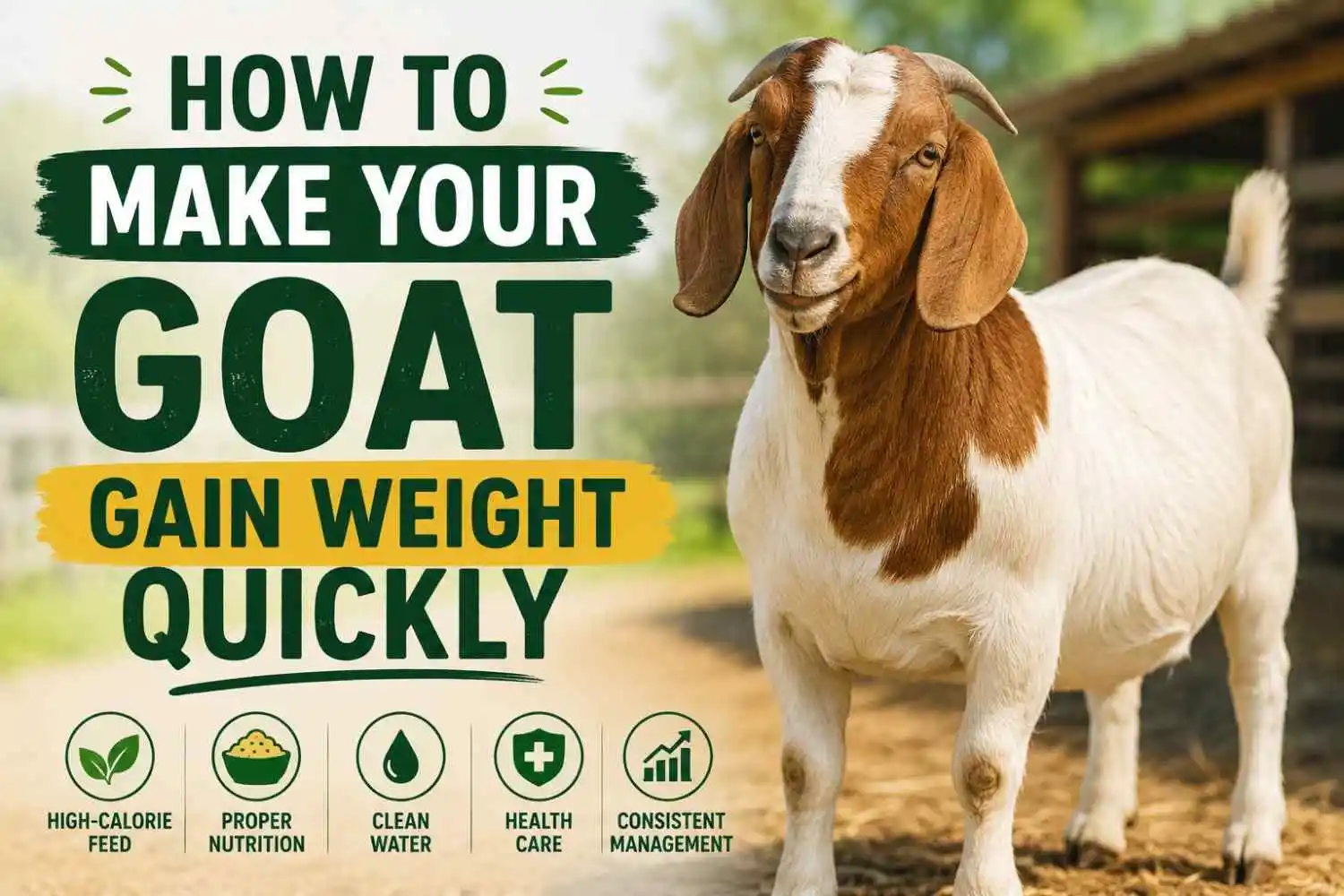
If you want to know how to make goat gain weight fast then this guide is for you. You bought a goat three months ago. You’re feeding it well — green fodder, dry roughage, some concentrate. But when you pick it up or look at its ribs, something feels wrong. It’s not growing the way it should.
Slow weight gain in goats is one of the most common and most frustrating problems for Indian farmers — whether you raise goats for meat, milk, or breeding. Every day a goat isn’t growing, you’re losing money.
The good news: in most cases, slow weight gain is fixable. And it doesn’t require expensive medicines or a vet visit every week. It requires understanding what your goat actually needs — and giving it consistently.
This guide answers every question farmers ask about goat weight gain, in plain language.
How Can I Make My Goat Gain Weight Fast?
The answer to this question is not one thing — it’s a system. Goats gain weight when four conditions are met at the same time: adequate feed quantity, correct feed quality, a healthy rumen, and no underlying disease or parasite load pulling their energy away.
Start by increasing the energy and protein density of the diet. Green fodder alone — even in good quantity — is often not enough for fast weight gain, especially in young kids or animals recovering from illness. Add a good quality concentrate (200–300 gm per day for small goats, 400–500 gm for larger animals) along with bypass protein sources like mustard cake (sarson ki khali) or groundnut cake.
Second, ensure your goat has clean water available at all times. Goats that are even mildly dehydrated show poor feed intake and slow growth. Third, deworm your animals every 90 days — internal parasites are silent weight killers that most farmers overlook. A goat carrying a heavy worm burden will not gain weight no matter how well you feed it.
Finally, add a daily goat weight gain supplement. Most Indian fodder and concentrate diets are deficient in zinc, selenium, phosphorus, and B-vitamins — all of which are directly involved in muscle building and growth. Correcting these deficiencies is often the single biggest trigger for visible weight gain.
Goat Supplements
VF2 Sheep & Goat | Goat Weight Gainer
₹415.00
Buy Goat Weight Gainer
How to Increase Goat Weight in kg?
If your goal is measurable weight gain — say, 8–12 kg in 60 days — you need a structured feeding plan, not just “more food.”
Here is a practical daily feeding plan for a goat targeting fast weight gain:
Morning: 1–1.5 kg green fodder (berseem, lucerne, or fresh grass) + 200 gm concentrate Afternoon: Ad-lib dry roughage (wheat straw or dry grass) Evening: 1 kg green fodder + 200 gm concentrate + mineral supplement mixed in feed
In addition to this, feeding bypass protein (mustard cake or soybean meal at 50–100 gm/day) gives the body the amino acids it needs to build muscle directly, without being broken down in the rumen.
Track weight every 15 days using a weighing scale or a goat weight measurement tape (see the section on how to get a goat’s weight below). If the animal is not gaining at least 80–100 gm/day, revisit the protein and mineral content of the diet before adding more bulk.
What Is the Best Food for Goats to Gain Weight?
The best foods for fast goat weight gain combine high energy, digestible protein, and key minerals. Here are the top choices available to Indian farmers:
Lucerne (Rijka / Alfalfa): The single best green fodder for weight gain. High in protein (18–22%), calcium, and digestibility. Feed 1–2 kg/day.
Berseem: Excellent protein fodder, widely available in North India during winter. Highly palatable and easily digested.
Mustard Cake (Sarson ki Khali): One of the cheapest and most effective protein concentrates available in India. Feed 100–150 gm/day mixed in concentrate.
Groundnut Cake (Moongfali Khali): High in protein and energy. Extremely palatable — even sick or recovering goats eat it willingly. Feed 100–150 gm/day.
Maize (Corn): High energy grain. Feed broken or ground maize at 100–200 gm/day as part of concentrate mix. Avoid excess — can cause acidosis in ruminants.
Jowar/Bajra: Good energy grains available regionally. Can replace or supplement maize in the concentrate.
Mineral + Vitamin Premix: Not a food, but equally important. No feed plan works at full efficiency without correcting the mineral gaps. A supplement like VF2 Sheep & Goat provides the complete micronutrient foundation on which all other feeds work better.
Avoid feeding excess dry straw as the primary diet — it fills the rumen without providing nutrition and slows growth significantly.
Why Give Baking Soda to Goats?
This is one of the most commonly asked questions in goat farming groups — and the answer is simpler than most people think.
Baking soda (sodium bicarbonate) acts as a rumen buffer. When goats eat high amounts of grain or concentrate for fast weight gain, the rumen can become acidic — a condition called rumen acidosis. Signs include bloating, reduced appetite, lethargy, and loose stools.
Baking soda neutralises excess rumen acid and keeps the pH in the healthy range (6.2–6.8) where digestion works efficiently.
How to use it: Place a small bowl of plain baking soda near the feed area and allow free-choice access. Goats will self-regulate — they eat it when they need it and ignore it when they don’t. You can also mix 2–3 gm per animal per day directly into concentrate during periods of high-grain feeding.
It is especially useful during the fattening phase when concentrate levels are higher than normal. It is not a medicine — it’s a digestive support tool, and it’s completely safe.
Which Vitamin Is Best for Weight Gain?
Several vitamins play a direct role in growth and weight gain in goats:
Vitamin A is essential for cell growth, tissue repair, and immune function. Deficiency leads to poor growth, rough coat, and frequent infections. Found in green fodder — supplementation is critical when green fodder is scarce.
Vitamin D3 is needed for calcium and phosphorus absorption — both critical for bone development and muscle function in growing kids. Often deficient in animals kept indoors with limited sunlight.
Vitamin B12 (Cobalamin) is arguably the most important vitamin for weight gain. It is directly involved in energy metabolism and red blood cell production. Goats deficient in B12 show poor appetite, anaemia, and stunted growth. B12 synthesis in the rumen depends on adequate cobalt in the diet — which most Indian fodder diets lack.
Vitamin E works with selenium to protect muscle tissue from oxidative damage, especially in fast-growing animals.
The most practical approach is to use a complete vitamin and mineral supplement daily rather than trying to supplement individual vitamins separately. This ensures no deficiency is missed and the vitamins work together synergistically.
Which Medicine Is Used for Weight Gain?
There is no single “medicine” that makes goats gain weight — and farmers should be cautious of products that claim otherwise. However, several veterinary and nutritional interventions genuinely support weight gain:
Dewormers (Anthelmintics): The first and most impactful “medicine” for weight gain in most Indian goats. Worm burden is the most common reason for poor growth. Deworm with albendazole or ivermectin every 90 days, and always before starting a fattening programme.
Liver Tonics: Goats with a compromised liver cannot metabolise nutrients efficiently. A course of liver tonic (containing sorbitol, B-complex, methionine) for 10–15 days significantly improves feed utilisation and appetite.
Vitamin B-Complex Injections: In severely thin or recovering animals, a vet-administered B12 injection can restart appetite and metabolism within days. Not needed for healthy animals — but very effective for the truly skinny goat.
Growth Promoter Premixes: Products like VF2 Sheep & Goat that contain rumen modulators, organic trace minerals, and growth-supporting vitamins work as nutritional growth promoters — safe, legal, and effective when used consistently over 4–8 weeks.
Always consult a vet before administering any injectable medicine. Nutritional supplements, dewormers, and liver tonics can be safely used by farmers without a prescription.
What Causes Goats to Not Gain Weight?
Understanding the cause is half the solution. Here are the most common reasons goats fail to gain weight in Indian farms:
Internal parasites (worms): The most common cause. Worms consume nutrients before the goat can absorb them. A heavy worm burden causes anaemia, bottle jaw (swelling under the chin), pale gums, and chronic weight loss. FAMACHA scoring (checking eyelid colour) is a simple field test for anaemia caused by barber’s pole worm.
Mineral deficiency: Zinc, copper, selenium, phosphorus, and cobalt deficiencies all suppress growth directly. They are nearly impossible to diagnose visually in early stages — which is why daily mineral supplementation is non-negotiable.
Poor rumen health: A goat with dysbiosis (imbalanced rumen microbes) converts feed poorly. Signs include chronic bloating, irregular stools, and poor appetite despite adequate feeding.
Coccidiosis: A parasitic disease especially common in kids under 3 months. Causes bloody or watery diarrhoea and rapid weight loss. Requires veterinary treatment.
Chronic respiratory infection: FMD, PPR (Pest des Petits Ruminants), or pneumonia keeps the immune system permanently activated — burning energy that should go toward growth.
Insufficient feed quantity: Simple underfeeding — especially in large flocks where dominant animals eat first and smaller ones get less.
If your goat is not gaining weight despite good feeding, work through this checklist in order: deworm first, then correct minerals, then evaluate rumen health, then consult a vet for disease screening.
How to Get a Goat’s Weight?
Not every farmer has a livestock weighing scale — but there is a reliable and free alternative: the heart girth measurement method.
Take a measuring tape and measure the circumference of the goat’s chest, just behind the front legs (the heart girth). Use this simple formula:
Weight (kg) = Heart Girth (cm) × Heart Girth (cm) × Body Length (cm) ÷ 10,000
Body length is measured from the point of the shoulder to the pin bone (base of tail).
For example: Heart girth = 70 cm, Body length = 65 cm Weight = 70 × 70 × 65 ÷ 10,000 = 31.85 kg
This method is accurate within ±2–3 kg for most adult goats and is widely used by extension workers across India. Measure every 15 days and record it — this is the only way to know if your feeding plan is actually working.
Goat weight measurement tapes with pre-calculated weight markings are available on Amazon and in most veterinary supply stores for under ₹100.
What Is the Magic Mix for Goats?
The “magic mix” is a popular term among goat farmers — especially in South India — for a homemade high-nutrition supplement given to underweight or recovering goats to kickstart weight gain. Different farmers swear by different versions, but the most effective recipe used by experienced goat farmers includes:
- 100 gm mustard cake (sarson ki khali)
- 50 gm jaggery (gud) — quick energy, improves palatability
- 50 gm groundnut cake (moongfali khali)
- 10 gm mineral mixture (or VF2 Sheep & Goat)
- 5 gm baking soda
- Mix with a small amount of water to form a ball or paste — feed once daily
Jaggery provides instant fermentable energy for the rumen, mustard and groundnut cake provide bypass protein, the mineral mix corrects deficiencies, and baking soda protects rumen pH.
This mix is best used as a top-up for 30–45 days during a fattening period, not as a permanent replacement for balanced feeding. Always ensure the animal has access to roughage alongside this mix to maintain healthy rumen function.
How Much Weight Can a Goat Gain Per Day?
This depends heavily on breed, age, sex, and nutrition quality. Here are realistic benchmarks for Indian breeds under good management:
| Breed | Average Daily Gain (ADG) | With Good Supplementation |
|---|---|---|
| Sirohi | 80–100 gm/day | 120–150 gm/day |
| Barbari | 60–80 gm/day | 100–120 gm/day |
| Beetal | 100–120 gm/day | 140–170 gm/day |
| Jamunapari | 90–110 gm/day | 130–160 gm/day |
| Osmanabadi | 80–100 gm/day | 120–140 gm/day |
| Crossbred kids | 100–130 gm/day | 150–200 gm/day |
Under intensive fattening with high-quality concentrate, bypass protein, mineral supplementation, and deworming, well-managed goats can reach the upper end of these ranges. Under typical village feeding with only roughage, most animals achieve only 40–60 gm/day — less than half their potential.
A realistic target for a fattening programme over 60 days is 5–8 kg of weight gain per animal, which translates to a significant improvement in market value.
What to Give a Skinny Goat?
A visibly thin goat — ribs showing, hip bones prominent, dull coat, low energy — needs a structured recovery plan, not just extra fodder.
Week 1 — Stabilise and deworm: Start with a full deworming dose (consult your vet for weight-appropriate dosage). Give a liver tonic for 7–10 days. Ensure fresh clean water is available at all times. Do not suddenly increase concentrate — a starved rumen needs gradual re-introduction to grain.
Week 2 — Introduce the magic mix: Begin the magic mix (mustard cake + jaggery + mineral premix) once daily. Keep roughage available freely. Start with 100 gm of concentrate and increase by 50 gm every 3 days.
Week 3–8 — Full fattening protocol: Move to the full feeding plan outlined earlier. Continue VF2 Sheep & Goat daily. If the animal is not showing appetite improvement by Week 3, a vet visit is necessary to rule out coccidiosis, PPR, or chronic infection.
Signs the recovery is working: Improved appetite within 7–10 days, coat starting to shine by week 3, ribs becoming less visible by week 4–6, consistent weight gain measurable by the heart girth method.
Patience is key. A skinny goat did not get thin overnight — it will not recover overnight either. But with consistent nutrition and care, most animals show significant improvement within 6–8 weeks.
The Bottom Line
Fast goat weight gain is not about one magic product or one trick feed. It is about doing the basics consistently and correctly — high-quality protein, adequate energy, rumen health, mineral balance, and parasite control working together.
Fix the worms. Fix the minerals. Feed smart. Measure regularly.
VF2 Sheep & Goat is formulated specifically to address the nutritional gaps that hold Indian goats back from reaching their true growth potential — with organic trace minerals, rumen modulators, and vitamins as per NRC recommendations. Used daily alongside a good feeding programme, it is one of the most cost-effective investments a goat farmer can make.
Frequently Asked Questions
How long does it take for a skinny goat to gain weight? With correct deworming, mineral supplementation, and improved feeding, most thin goats begin showing visible improvement in 3–4 weeks and reach healthy body condition in 8–12 weeks.
Can I give eggs to goats for weight gain? Some farmers add 1–2 eggs to the diet of very thin recovering goats for a short period. While goats are ruminants and not naturally adapted to animal protein, small amounts are not harmful and provide quick amino acids. It is not a standard practice and not necessary if a good plant-based protein source (mustard cake, soybean) is available.
Is jaggery good for goat weight gain? Yes. Jaggery (gud) is an excellent energy source for goats. It is highly palatable, stimulates the rumen microbes, and is a useful carrier for mixing medicines or supplements. Feed 50–100 gm/day during fattening.
What is the best age to fatten a goat for meat? Kids between 4–9 months of age have the highest feed conversion efficiency — meaning they convert feed to body weight more efficiently than adult animals. This is the ideal window for intensive fattening before market.
How do I know if my goat has worms? Check the inner lower eyelid — it should be bright pink to red. Pale pink or white eyelids indicate anaemia caused by worms (FAMACHA score 3–5). Other signs include bottle jaw, pot belly, rough coat, loose stools, and poor growth despite good feeding.
This is a refreshing breakdown because it correctly points out that green fodder alone often isn’t enough for rapid growth, which is a common oversight for many farmers. I particularly appreciate the emphasis on having a healthy rumen alongside high-quality feed, as parasites are often the hidden culprit behind stalled weight gain that isn’t solved by just adding more concentrate.