

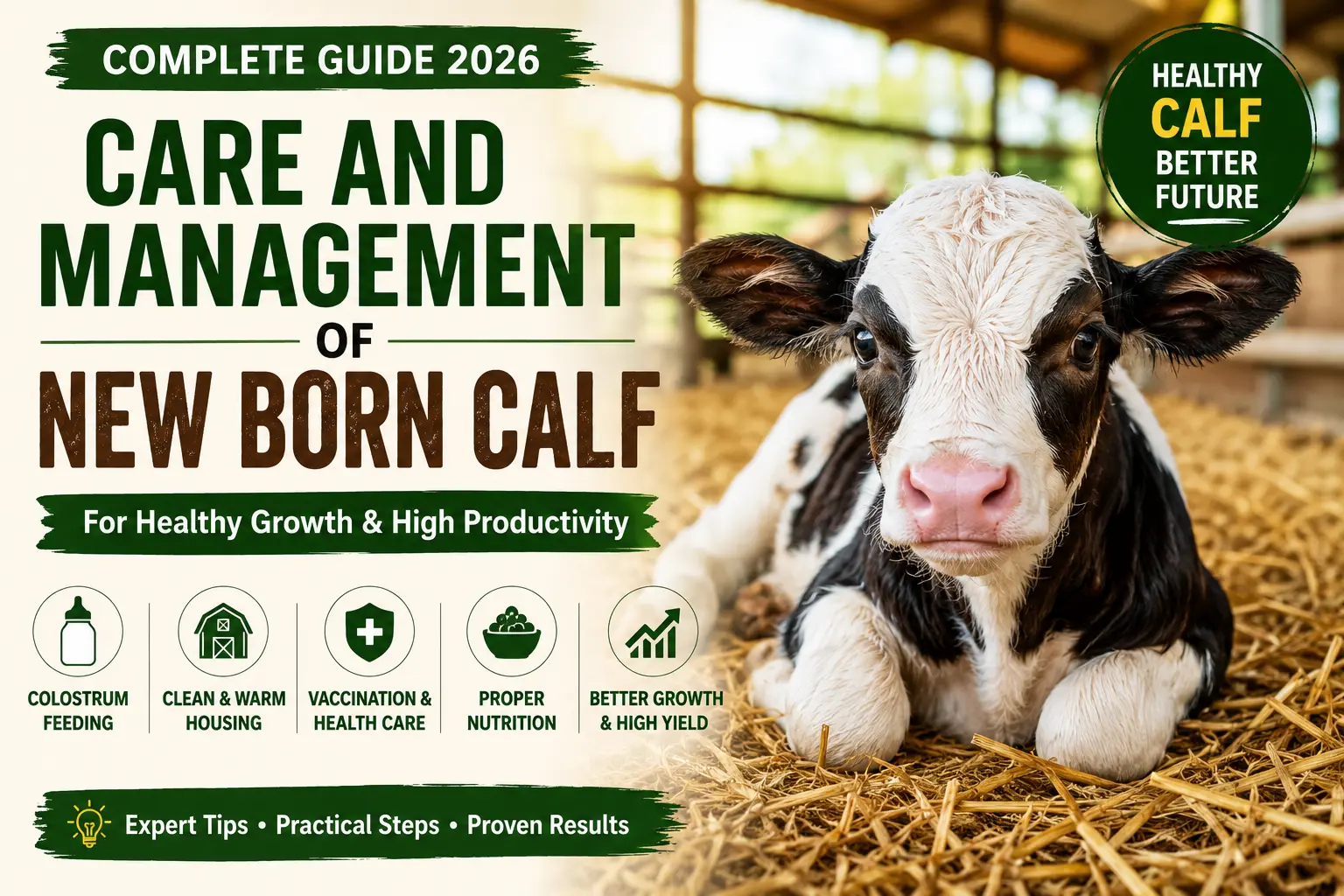
The care and management of new born calf is one of the most important aspects of successful dairy farming. A healthy calf today becomes a productive dairy cow or breeding bull tomorrow. Poor calf management during the first few weeks can lead to diarrhea (scours), pneumonia, poor weight gain, delayed maturity, and even calf mortality.
According to dairy experts, the first 24 hours after birth are the most critical because a newborn calf depends entirely on colostrum for immunity. If it does not receive enough high-quality colostrum in time, its risk of disease increases significantly.
Whether you own two cows or manage a commercial dairy farm, following the right care and management of new born calf practices can improve survival rates, growth, and future milk production.
Why Is Proper Care and Management of New Born Calf Important?
A newborn calf is born with very little natural immunity. Unlike humans, antibodies are not transferred effectively before birth, so calves rely on colostrum—the first milk—for disease protection. Failure to provide adequate colostrum is one of the leading causes of illness in young calves.
Good care and management of new born calf helps:
Improve survival rates
Reduce veterinary expenses
Promote faster growth
Build stronger immunity
Improve future milk production
Reduce disease outbreaks on the farm
Immediate Care After Birth
The first hour after calving is often called the Golden Hour.
Immediately after birth:
Remove mucus from the nose and mouth if breathing is difficult.
Allow the mother to lick the calf, which helps stimulate circulation and dry the body.
Dry the calf with a clean towel if the weather is cold.
Move the calf to a clean, dry, and well-bedded area.
Ensure it stands and suckles as soon as possible.
Importance of Colostrum Feeding
Colostrum is often called the calf’s first vaccine because it contains antibodies, proteins, vitamins, and energy essential for early immunity.
Experts recommend feeding colostrum within the first 2–6 hours after birth, as antibody absorption decreases rapidly after that.
Benefits include:
Strong immune protection
Lower risk of diarrhea
Better weight gain
Improved gut development
Higher lifetime productivity
How to Care for a Newborn Calf?
The best care and management of new born calf begins with five simple steps:
Feed quality colostrum immediately after birth.
Keep the calf warm, dry, and comfortable.
Disinfect the navel using iodine.
Maintain strict hygiene in feeding equipment and housing.
Monitor daily for appetite, body temperature, diarrhea, or breathing problems.
Daily observation helps detect health problems before they become serious.
What Is the Care and Management in Calf?
Calf management involves providing proper nutrition, housing, healthcare, hygiene, and monitoring from birth until adulthood.
A successful calf management program includes:
Balanced milk feeding
Clean drinking water
Early introduction of calf starter
Vaccination
Deworming
Disease prevention
Regular body weight monitoring
Good management during the first three months significantly influences future growth and milk production.
What Are the 5 C’s of Calf Care?
Veterinarians commonly describe successful calf management using the 5 C’s:
1. Colostrum
Feed sufficient, high-quality colostrum quickly after birth.
2. Cleanliness
Maintain clean bedding, feeding bottles, buckets, and housing.
3. Comfort
Provide dry bedding, proper ventilation, and protection from extreme weather.
4. Consistency
Feed milk at the same time every day using a consistent routine.
5. Careful Observation
Monitor calves daily for diarrhea, coughing, poor appetite, or weakness.
These principles form the foundation of effective care and management of new born calf.
What Is the 3-2-1 Rule for Calves?
The 3-2-1 rule is widely used for colostrum management:
Feed within 3 hours of birth.
Provide approximately 2 litres of high-quality colostrum.
Complete the first feeding within 1 hour whenever possible, especially if the calf cannot nurse naturally.
Although exact feeding volumes vary with breed and body weight, the key message is feed early and adequately because antibody absorption falls rapidly after birth.
What Is the 1-2-3 Rule for Calves?
Many dairy professionals also refer to the 1-2-3 rule:
First feeding within 1 hour
At least 2 litres of colostrum
Finish within the first 3 hours
The principle remains the same—early colostrum saves calves.
How Many Litres of Milk Should a Calf Drink Per Day?
Milk intake depends on age and breed.
| Calf Age | Milk per Day |
|---|---|
| 1–3 days | Colostrum as recommended |
| 4–14 days | 4–6 litres |
| 2–8 weeks | 6–8 litres |
| After 8 weeks | Gradual reduction during weaning |
Feed milk in two or three equal portions each day and avoid sudden dietary changes.
Do Newborn Calves Need Water?
Yes.
Many farmers mistakenly believe milk provides enough water, but calves should have access to clean drinking water from the first week of life. Water supports rumen development, encourages starter feed intake, and improves digestion.
Fresh water should always be available.
How to Feed a Baby Calf?
A practical feeding schedule includes:
Colostrum immediately after birth
Whole milk or milk replacer twice daily
Introduce calf starter from the second week
Offer clean water daily
Provide quality hay gradually as rumen development progresses
Feed milk at body temperature and keep bottles and buckets thoroughly clean after every feeding.
When to Deworm a Newborn Calf?
Deworming schedules vary depending on your veterinarian’s advice, parasite risk, and farm conditions.
Many Indian dairy management recommendations suggest the first deworming at around 10–14 days of age, followed by regular deworming during the growing period based on veterinary guidance.
Never administer dewormers without consulting your veterinarian.
How to Make a Calf Grow Faster?
Healthy growth depends on genetics, nutrition, and management.
To improve weight gain:
Feed adequate milk
Introduce quality calf starter early
Supply clean drinking water
Maintain proper hygiene
Prevent diarrhea and pneumonia
Follow vaccination and deworming schedules
For calves requiring additional nutritional support, many farmers also include a scientifically formulated calf growth powder during the growing stage. Products such as the VF2 Calf Grow calf growth powder are designed to support healthy weight gain, skeletal development, and overall growth when used as part of a balanced feeding program.
Common Diseases in Newborn Calves
The most common health problems include:
Calf diarrhea (scours)
Pneumonia
Navel infection
Joint ill
Coccidiosis
Worm infestation
Recent industry guidance notes that scours remains one of the leading causes of illness and death in pre-weaned calves, making hygiene and timely colostrum feeding essential.
Vaccination Schedule for Calves
Vaccination schedules differ according to region and disease prevalence.
Common vaccines may include protection against:
Foot and Mouth Disease (FMD)
Hemorrhagic Septicemia (HS)
Black Quarter (BQ)
Brucellosis (female calves where recommended)
Always follow the vaccination schedule advised by your local veterinarian or state Animal Husbandry Department.
Common Mistakes Farmers Make
Avoid these frequent mistakes:
Delayed colostrum feeding
Dirty feeding bottles
Wet bedding
Overfeeding milk
No access to water
Delayed disease treatment
Poor ventilation
Ignoring growth monitoring
Small management errors during the first month can affect productivity for years.
Frequently Asked Questions
Can a newborn calf survive without colostrum?
Survival is possible, but the risk of disease and mortality increases significantly because the calf misses essential antibodies. (UC Agriculture and Natural Resources)
When should calves start eating solid feed?
Offer a good-quality calf starter from around 2 weeks of age to encourage rumen development. (Dairy Knowledge)
What is the ideal temperature for newborn calves?
Calves should be protected from cold winds, heavy rain, and excessive heat. Dry bedding and proper ventilation are more important than maintaining an exact temperature.
Which supplement supports healthy calf growth?
Along with balanced nutrition, many dairy farmers use a calf weight gain supplement to help support growth, appetite, and skeletal development. The VF2 Calf Grow supplement can be included as part of a veterinarian-approved feeding program.
Conclusion
Proper care and management of new born calf is an investment in the future of your dairy farm. Timely colostrum feeding, clean housing, balanced nutrition, regular health monitoring, and preventive care can dramatically improve calf survival and long-term productivity.
Healthy calves grow into stronger heifers and high-producing dairy animals. By following these best practices and consulting your veterinarian whenever needed, you can reduce disease risks, improve growth rates, and build a more profitable and sustainable dairy operation.